
Vets Move Junk | Case Study
From $59,224 to $387,072 in monthly revenue
Vets Move Junk and Four15 Digital.
Four15 Digital helped Vets Move Junk rebuild the way it acquired and measured customers across East Bay, Orange County and San Diego. The engagement combined paid media management with a new booking experience, call tracking and reporting tied to completed jobs.
- Calls from the website and ads were not tracked. Web conversions counted booking-button clicks, while customers left the site to book through Housecall Pro.
- Weak measurement signals, investment not clearly aligned to service value and a fragmented booking experience limited useful optimization.
By August 2025, the business had recorded $2.62 million in year-to-date revenue, up from $1.46 million in the same eight months of 2024. That is $1.16 million in additional revenue and 80% year-over-year growth.
|
Business result
|
Reported outcome
|
|---|---|
|
January through August revenue
|
$1.46M → $2.62M
|
|
Year over year revenue growth
|
+80%
|
|
Latest month revenue growth
|
August +45% year over year
|
|
Monthly revenue above $300K
|
Six consecutive months, March–August 2025
|
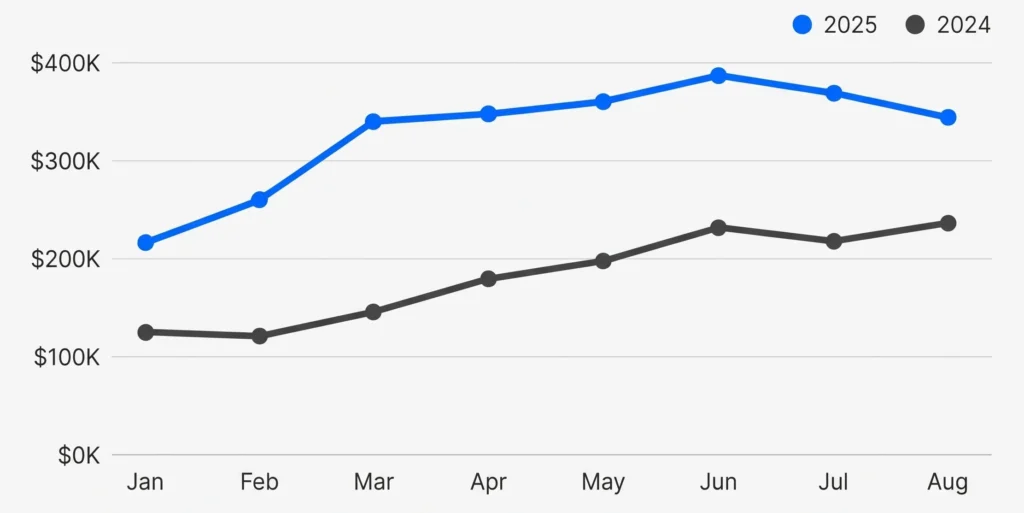
Total business revenue, January–August. Source: September 4, 2025 weekly agenda, embedded historical performance table. Figures are business revenue across all sources, not revenue attributed solely to Four15 or paid advertising.
June 2025 reached $387,072 in revenue. The latest complete month, August, closed at $344,255 versus $236,687 a year earlier. These are the combined results of the three operating markets.
The starting account was buying traffic without a dependable view of what happened after the click. Our audit identified several connected problems that shaped the work.
Calls from the website and ads were not being tracked, while the listed web conversions were named for booking-button clicks. Customers then moved to Housecall Pro to book. That left the account with weak signals for deciding which traffic deserved more investment.
We launched a custom website booking form, integrated tracking with Housecall Pro and CallRail, and developed offline conversion imports. Reporting could then connect marketing sources with completed jobs and revenue. The team continued auditing missing source tags and click identifiers as the program grew.
The audit showed $9,021 allocated to mattress disposal, furniture pickup, couch removal and refrigerator disposal, compared with $1,057 across office cleanouts, hoarding cleanouts and commercial junk removal. The opportunity was to test service value and allocate budget accordingly.
We separated higher- and lower-value demand, refined keywords and exclusions, and managed each geography against its own results. By August 2025, search-term analysis was comparing spend with revenue: terms containing “dump,” for example, showed $4,653 in spend against $3,935 in recorded conversion value and were flagged for removal.
The audit found core campaigns using Maximize Clicks, with Search Partners and Display enabled. Those two networks accounted for $5,124 in the displayed 30-day report. We removed those placements from Search, cleaned up campaign settings and tested conversion- and value-based bidding as measurement improved.
We also expanded into Microsoft Ads. On Google, we retained target CPA in San Diego when it outperformed the value-based bidding test. Later recommendations adjusted bidding to account for revenue-reporting delays and budget limits.
Four15’s work addressed the acquisition process from search demand through booking and completed-job reporting. Revenue grew substantially during the engagement; the records do not isolate the incremental contribution of individual changes.
The initial audit showed that the website needed significant attention alongside the advertising. Calls to action blended into the page, benefit messaging was limited, and customers moved into a separate Housecall Pro booking experience that was difficult to customize and track.
Four15 refreshed the website’s design across desktop and mobile, updating imagery, page layouts, typography, spacing and calls to action. We revised service and location content, improved mobile navigation through dropdowns, and corrected buttons and links so visitors reached the right booking destination.
A major part of the project was rebuilding the booking form directly on the website. Drawing on our review of established junk-removal competitors, we designed a guided flow for checking service availability, selecting an appointment and providing pickup details.
Making that experience work required custom development around Housecall Pro. We worked through ZIP-code validation, location-specific booking limits, appointment timing, address autofill and confirmation-page details. The integration created job records and passed marketing-source information into the operational system, helping connect website inquiries with completed jobs and revenue.
The work included API and webhook investigation, backend form development, and a custom WordPress database feeding a nightly reporting export. It extended beyond the form’s appearance into how bookings entered the business and how their outcomes could be measured.
We continued refining the experience as customer behavior revealed new issues. Later reviews showed that some customers thought they were requesting an online price rather than scheduling an in-person estimate. That informed clearer booking language and further testing.
The August review showed a 46% cancellation rate for Google web bookings versus 20% for Google call-sourced jobs across June and July. When a booking notice failed to reduce cancellations, the September review recommended removing it. This was an ongoing effort to improve the path from inquiry to completed work, rather than a demonstrated cancellation-rate win.
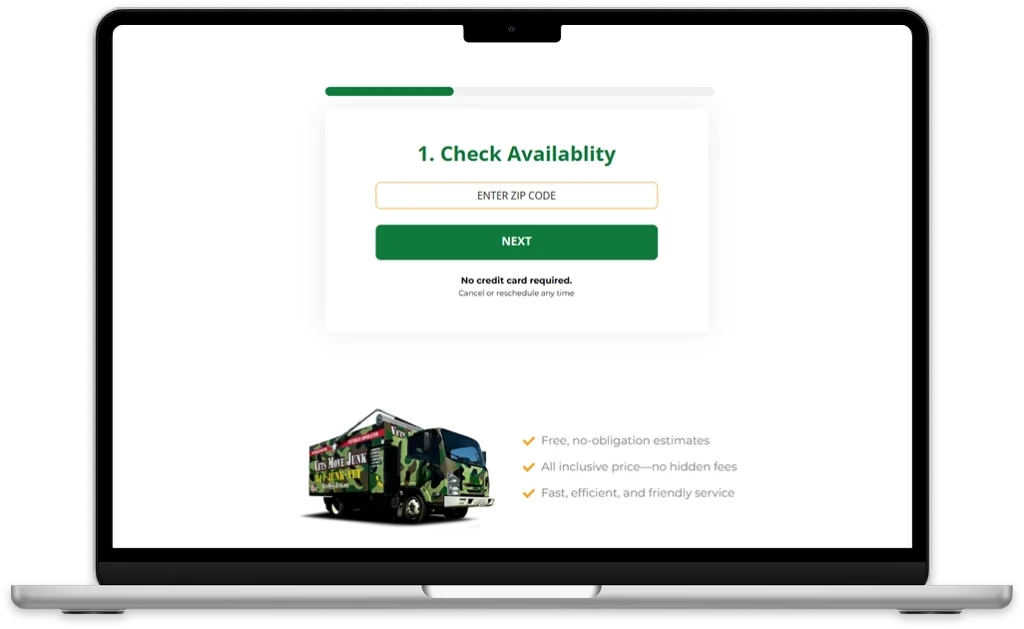
The website and form rebuild were a substantial part of the engagement: a more polished customer experience, supported by the operational connections needed to turn bookings into scheduled work and measurable business results.
INTERNAL FOUR15 REFERENCE • Calculations and editorial decisions
Opening headline: the lowest monthly revenue in the January 2023–August 2025 history is $59,223.60 in March 2023; the highest is $387,071.56 in June 2025. Rounded to whole dollars for the headline. Four15’s kickoff was June 12, 2024, so the headline is explicitly labeled as historical business growth.
|
Month
|
2024 revenue
|
2025 revenue
|
Change
|
|---|---|---|---|
|
January
|
$125,507.19
|
$216,426.74
|
72.4%
|
|
February
|
$121,322.58
|
$260,138.95
|
114.4%
|
|
March
|
$146,175.27
|
$339,621.33
|
132.3%
|
|
April
|
$180,048.02
|
$347,191.50
|
92.8%
|
|
May
|
$198,233.83
|
$360,025.96
|
81.6%
|
|
June
|
$232,282.65
|
$387,071.56
|
66.6%
|
|
July
|
$218,205.01
|
$368,677.77
|
69.0%
|
|
August
|
$236,686.95
|
$344,255.11
|
45.4%
|
|
Jan–Aug total
|
$1,458,461.50
|
$2,623,408.92
|
79.9%
|
Additional revenue = $2,623,408.92 − $1,458,461.50 = $1,164,947.42. August year-over-year growth = 45.4%. March through August 2025 each exceeded $300,000 in revenue.